The standing charge is a fixed fee that all customers pay to be connected to Guernsey's electricity network to make sure there is a predictable income supporting the maintenance and improvement of the entire electricity infrastructure on the island.
- Fixed charge: a consistent and predictable source of income which allows us to plan, invest in, and future-proof our island.
- Variable charge: supporting costs relating specifically to the provision of actual electricity you use every day.
These types of charges are common across utility suppliers in all jurisdictions and function in a similar way to ‘line rental’ charges on a home phone bill.
Why am I being charged a Standing Charge for my electricity supply?
An electricity standing charge is the fixed amount payable by all those who wish to be connected to Guernsey’s electricity network, regardless of how much electricity you use, and provides the island with the fixed and predictable income it needs to keep our island’s central nervous system reliable and able to meet demand.
Another way to visualise it is as a subscription to the entire electricity network, charged on a quarterly basis.
Investing in a planned way can also help avoid increased emergency roadworks and can reduce power outages, but the cost of this investment has significantly increased with recent high rates of inflation globally.
Electricity networks run quietly in the background to provide everyone with a secure supply of power needed to fuel modern life; without funding from fixed standing charges, this would not be possible.
Why do the standing charges increase?
Renewable ‘micro-generation’ systems, such as home solar panel installations, are also increasing across the island. This means those who are self-generating pay for less and less electricity from the grid
(the 'variable consumption' charges), but always need a backup supply of power.
However, the cost of maintaining the electricity grid for all islanders does not reduce. If standing charges didn't exist, those unable to afford their own micro-generation systems at home would need to contribute more through increased consumption charges to the maintenance and development of the electricity grid.
Power supply from renewable generation is unpredictable, i.e. it cannot provide power all the time as the systems can only produce energy when, for example, the sun in shining and wind is blowing. This intermittent nature means people with micro-generation in their homes will still need to remain connected to the electricity grid to supplement electricity on days when the sun isn’t shining as a backup service.
This back-up service is paid for by their standing charge. Standing charges paid equally across all customers means that those unable to generate their own energy won’t carry the full burden of the cost to fund investment in the island’s electricity network
Guernsey Electricity’s fixed costs account for around 50% of our total costs, however the proportion of our revenue generated from fixed Standing Charges is around 12.5%.

What does my standing charge pay for?
We need to make sure we generate enough steady and predictable fixed income to allow us to continue providing a reliable and consistent 24-hour service supplying power today and into the future.
This means your standing charge payments support the fixed costs of supplying electricity to your home and 30,000 other customers – for example:
- Investing in new bulk supply points such as at the Princess Elizabeth Hospital and Beau Sejour
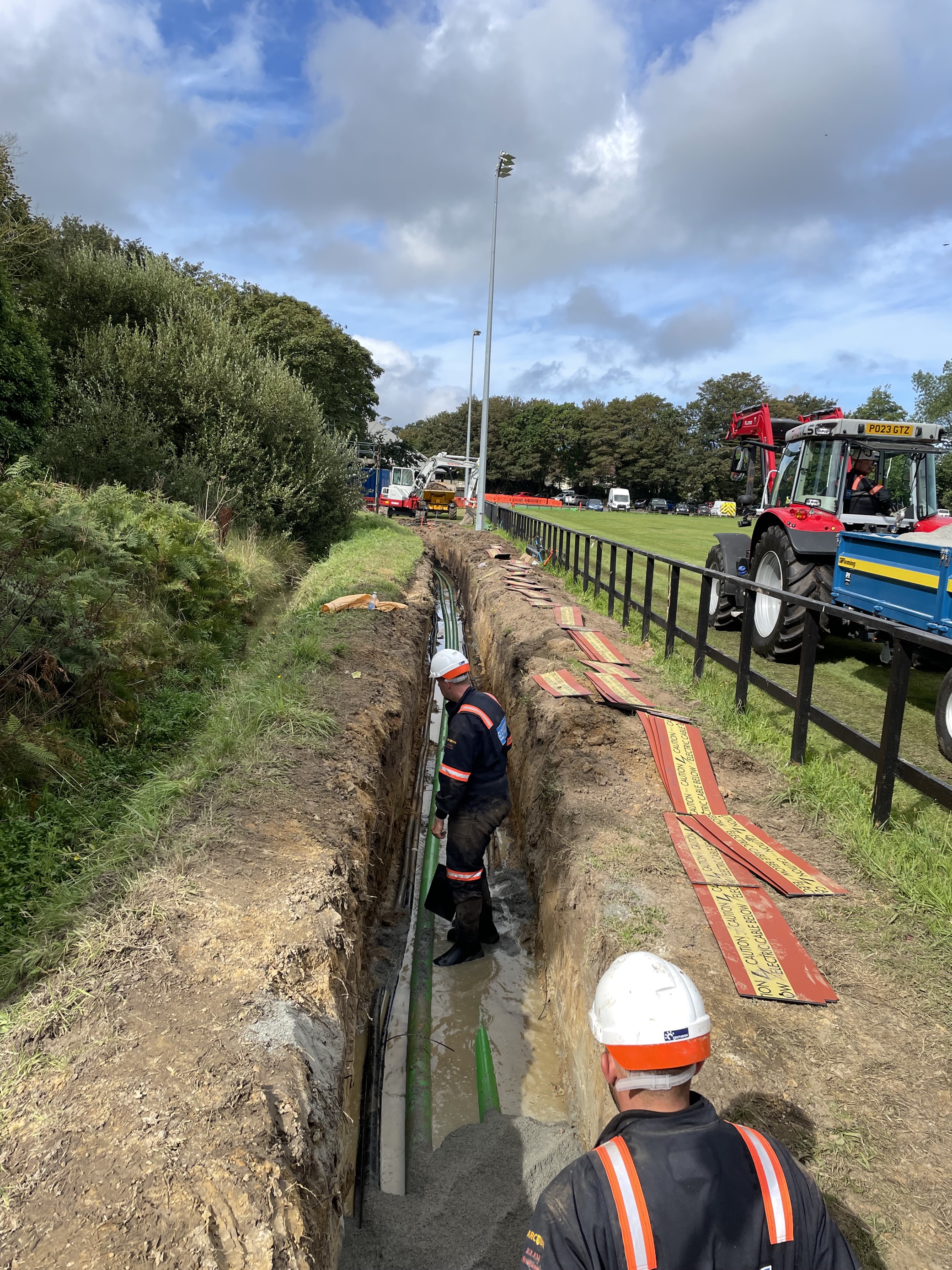
- Developing the tens of thousands of metres of electricity cabling and assets across the island
- Critical investment needed to make sure our power station can supply 100% of the electricity the island needs on the coldest night in winter, if needed.
What does my ‘variable’ (usage) charge pay for?
Usage charge is the price per kWh and pays for the actual electricity you consume, which can vary depending on your needs, demands, and the time of year.
As by its nature this activity is inconsistent, we cannot rely solely on this income to make long-term investment decisions critical to the island’s wellbeing.
During a cold winter’s day when you’re at home in mid-February, your property will use a lot more electricity than if you’re out all day on the beach in mid-July for example, which means we’re unable to fully predict our annual income based on unit charges alone.
The unit cost pays for activities such as:
- Electricity imported from the European grid
- Generation at the power station during peak times
- Cost to transfer and distribute electricity across the network to meet demand
- Cost to employ staff to generate, distribute, maintain and manage the electricity for daily demands.
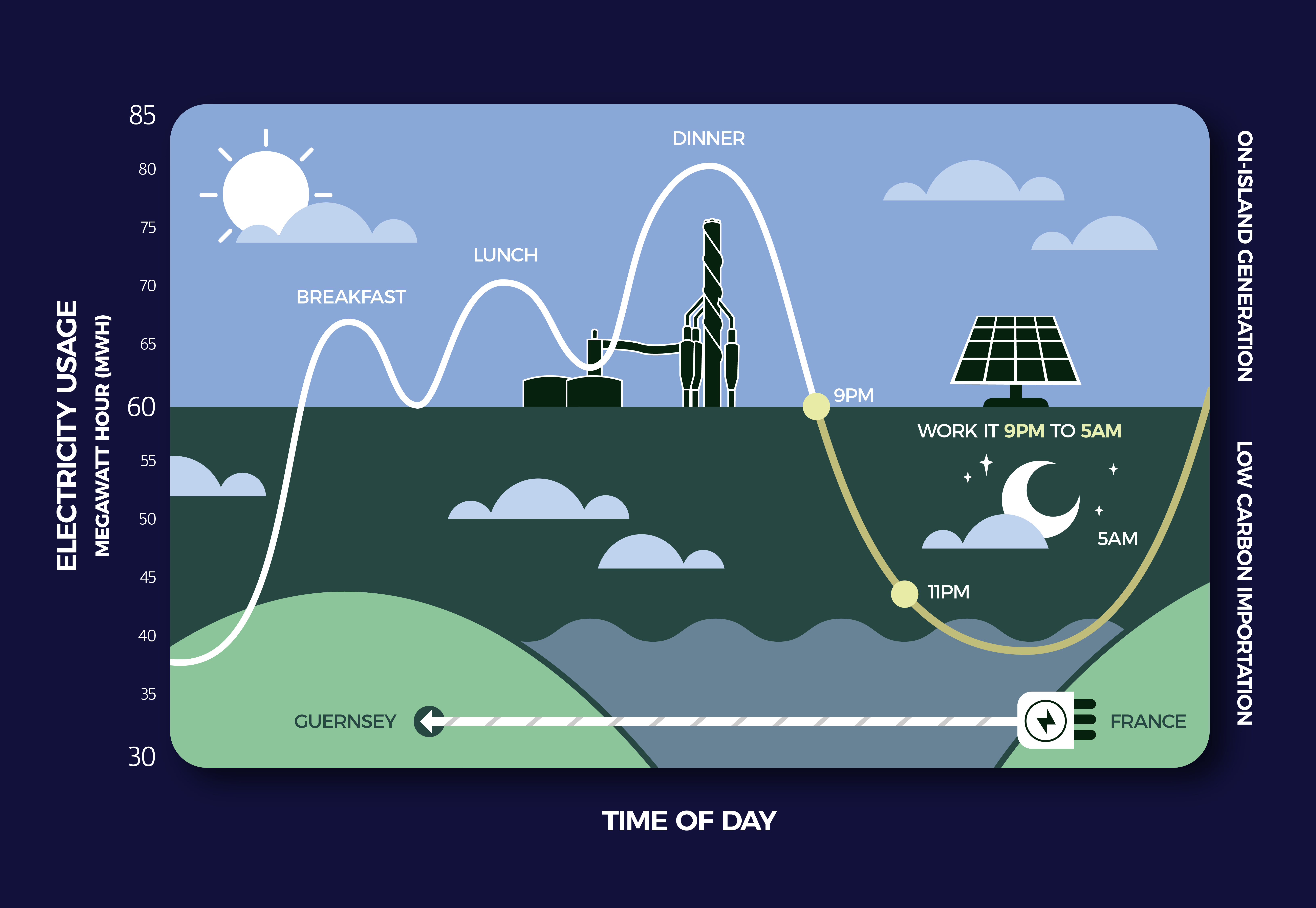
Our 'load profile' below demonstrates a typical daily demand during winter, peaking at around 8am, 2pm and 6pm when people consume more units of electricity.
What are the charges?
Another way to visualise the electricity standing charge is like a monthly subscription to the entire electricity network, charged on a quarterly basis. However, it isn’t a charge to simply rent your meter and instead reflects a contribution to your connection to the network and the costs associated with providing this.
2024 Standing Charge
|
Charge Type |
Quarterly Charge – as shown on your bill |
|
Lighting and power (“Primary Meter”) |
£68.25 |
|
Electric Heating (“Secondary Meter”) |
£11.41 |
If you have electric central heating or a second meter for lighting and power, your property is demanding a large amount of electricity ‘load’ from the network, which needs additional network investment and support. This means your overall standing charge will be higher to account for the additional demand.
The combined revenue from fixed and variable electricity charges means we can continue to maintain a secure and reliable electricity supply to the Island.
How do Guernsey Electricity spend tariff revenue?
Development your electricity bills pay for includes:
- Importing low-carbon electricity through the subsea cable. This includes maintaining infrastructure from France, across Jersey and onto Guernsey.
- Running the Vale power station to meet increased electricity demand,
- Maintaining over one million metres of cable that make up our electricity grid,
- Keeping our streets well-lit,
- Repairing emergency faults quickly,
- Investing in our dedicated and reliable workforce to ensure we provide a high-quality service to Islanders.
- Delivering our multi-million energy investment programme to keep pace with demand.

Shouldn't larger customers pay more?
Customers with an electricity demand greater than 75kW already pay more for their electricity.
These customers are placed on a different tariff, either the ‘Industrial Maximum Demand’ tariff or the ‘Industrial Economy’ tariff. Both of these tariffs incur additional tariff charges for each kW of higher usage rates to reflect their higher demand on the4 network. These customers also pay a standing charge.
See the Commercial tab on our Tariffs page for more information.
Does the standing charge act as a meter rental?
No, the electricity standing charge isn’t a rental charge for the meter. The standing charge works like a subscription to the entire electricity network charged on a quarterly basis.
Does Guernsey Electricity make a profit from standing charges?
All income received, including profits, by Guernsey Electricity are reinvested into the electricity network and infrastructure.
As a limited company, we are solely owned by our shareholder the States Trading Supervisory Board.
Don’t my taxes pay for the electricity network?
Guernsey electricity network is only funded by customer electricity tariffs, and this is our entire revenue stream.
Whether that is from fixed standing charges or variable consumption charges, it is this money which is used to make sure you receive dependable power in your home and workplace 24/7.
Funding investment in the electricity infrastructure through tariffs is fair as it ensures all customers – including large corporations – contribute proportionately towards these costs.
Are tariffs not regulated?
Guernsey is still playing catch up after years when there was no increase in base tariffs due to challenges with the previous regulatory regime. This kept bills artificially low, and starved Guernsey Electricity of the funds needed to adequately invest in a network fit for the 21st century.
The fixed income generated from standing charges allows us to plan in a more effective and economical way.
The last few years have seen significant investment in maintaining and upgrading our electricity infrastructure. Between 2021 and 2024, we will have spent over £30 million in maintaining and upgrading the local network and electricity infrastructure to benefit all customers.
This includes, for example, the £12.9 million Princess Elizabeth Hospital project, including the installation of a Bulk Supply Point and the largest electricity cable laying exercise on Guernsey since the 1980s.