Let’s forget the office buzzwords around Q4, year-end or annual reviews for a moment. With the shorter days and a new year to embrace, this season awakens that irresistible urge not just to take stock and look back on old stories but also look ahead to the fresh horizon of new beginnings.
This was no ordinary year for Guernsey Electricity (GEL). You may have noticed from our logo or spotted at Seafront Sunday, Donkey Derby or at the Powering Life for Less Show that 2025 etched our 125th year into Guernsey’s history books. So, this year more than most, we’ve had cause to pause, reflect, and review not only this milestone, but the other 125 years since our genesis.
We’ll start at the beginning
Here’s a quiz question for the Local knowledge round: When did Guernsey first generate and distribute electricity?
A postcard perfect answer: 20 February 1900.
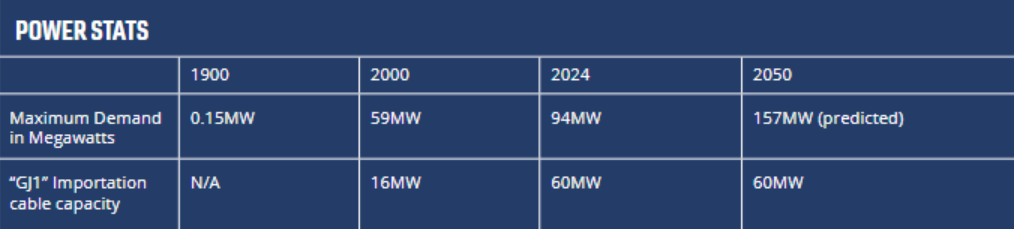
Back then, maximum demand was 150 kilowatts (kW), which in today’s currency might power heating and ventilation in one medium-sized office. Fast forward to now and maximum demFast forward to now and maximum demand peaks at over 80,000 kW (80 Megawatts) most days in winter.
From The Guernsey Electric Light and Power Company to the States Electricity Board, through to Guernsey Electricity and now GEL, our name may have morphed with time, but supplying reliable, secure electricity has been our one constant.
What does ‘security of supply’ mean?
When you flick on a light, microwave last night’s leftovers, or plug in your phone, electronics, or electric car, the power is there ready for you. That moment is the security – you expect it to be there, and it is.
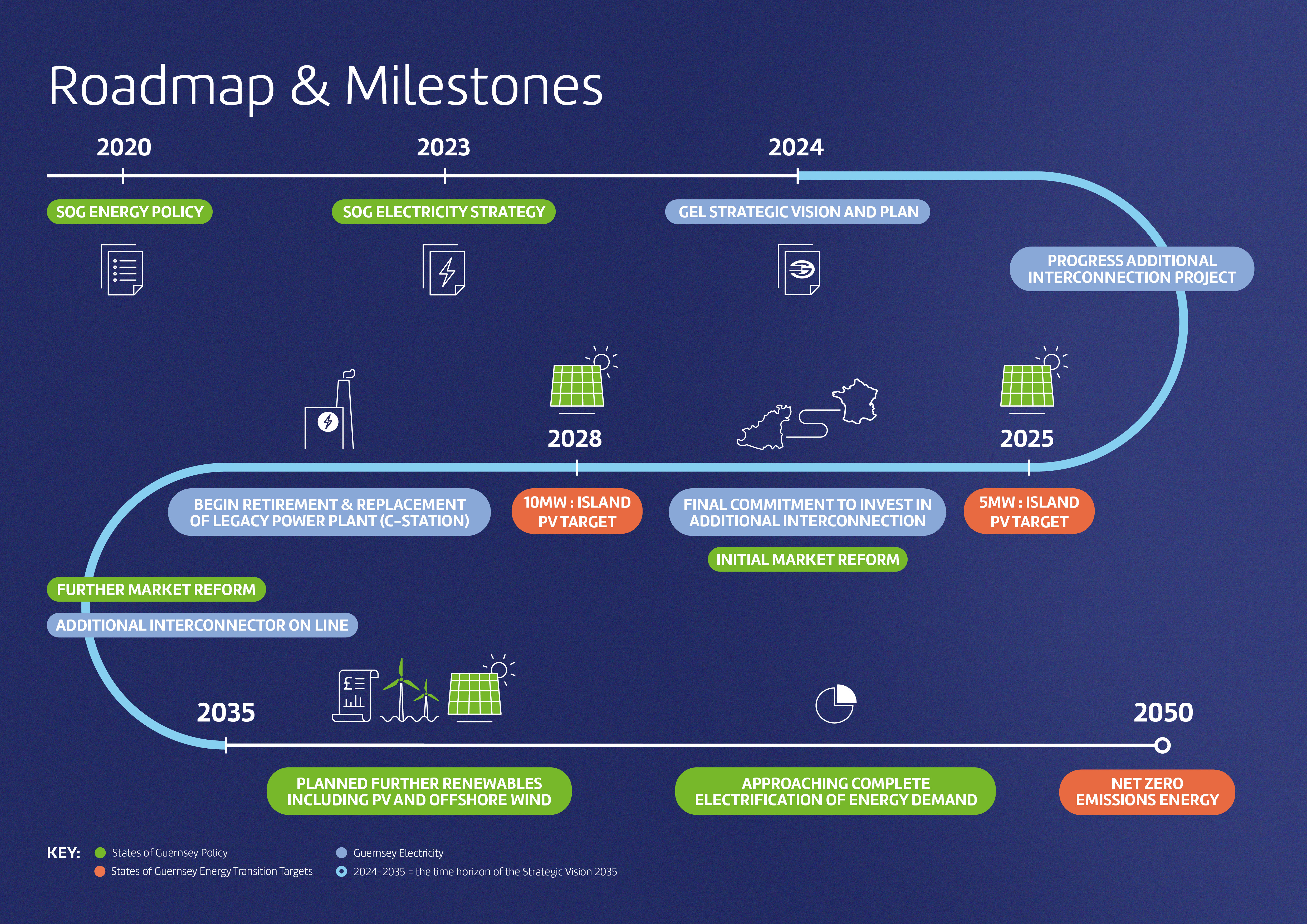
So how do we plan to deliver reliability today and in the future? Our Strategic Vision’s roadmap outlines the evolution of the Electricity Strategy up to 2050, approved by The States of Guernsey in September 2023.
Rigorous research, assessments, and considerations explored several ways Guernsey could meet its future demand. We’re sure you’ve seen suggestions of tidal power or industrial hamsters on wheels…
Unfortunately, due to cost, the former suggestion is as helpful as the latter, as our local demand for electricity means tidal power isn’t yet commercially viable. There simply aren’t enough of us.
We can’t fully go into tidal considerations within this word count, but our Electricity Strategy and Strategic Vision 2035 should help clear it up.
After careful consideration, UK experts recommended that the States of Guernsey establish:
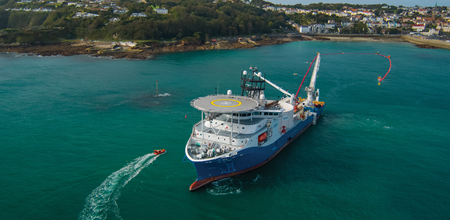
- Additional ‘interconnection’ (through a second subsea importation cable from Europe)
- On-island renewables (solar PV), and;
- Offshore renewables
What is the energy transition?
We need a long-term structural shift in global, regional and national energy systems to rely less on fossil fuels (coal, oil and natural gas) and transition to more renewable, sustainable sources (such as hydro, wind and solar energy).
And this is what we’re doing here in Guernsey. Using our current and, in future, a second subsea importation cable, we’re transitioning energy away from fossil fuels, which is why the source of electricity plays a major stake in the decarbonisation journey.
Where does decarbonisation take shape?
This is the process of reducing or removing carbon dioxide (CO2) emissions from economic activity to mitigate the effects of anthropogenic (manmade) global warming.
For us here at Guernsey Electricity, that means increasing islanders’ reliance on low-carbon energy sources and encouraging better energy efficiency.
As we navigate through this decade’s midlife, now comes the implementation of the necessary infrastructure – decarbonisation through the energy transition. Aren’t you glad we clarified those terms?
So what do we do?
Guernsey’s energy future is unique as it’s our responsibility to generate, import and, later, distribute electricity to a relatively small market through a network mostly hidden beneath our feet. Our island’s landscape may be free from overhead power lines, but that means regular roadworks to develop and upgrade the force behind those convenient light switches.
Infrastructure from decades ago simply won’t keep up.
Think of water; pipes were built to serve the demand of their time, and wear and tear paired with an ever-increasing amount of flow forcing through creates incredible strain.
As much of our electricity infrastructure was built decades ago, some of it is a Silent Generation system coping with Gen Z energy demands. You could liken that to forcing a litre of water through a straw – at some point, the straw will break if it’s not upgraded.
These figures starkly illustrate Guernsey’s growing appetite for energy, driven by over a century of development, and highlights a critical near-term challenge. With our historic peak in 2024 outstripping our 60MW importation cable capacity by over 30MW, it underscores a need to invest in Guernsey’s energy infrastructure.
Looking ahead, there are ambitious plans to limit the 2050 demand to 125MW – a full 32MW below the predicted 157MW, which signals a necessary community-wide drive toward active energy management and efficiency to secure a less costly future.
Installed in 2000, GJ1 was the single biggest reduction to the island’s carbon emissions, and since then, our power station has been relegated to a ‘top-up and back-up’ source when electricity demand is higher than what our current cable can import.
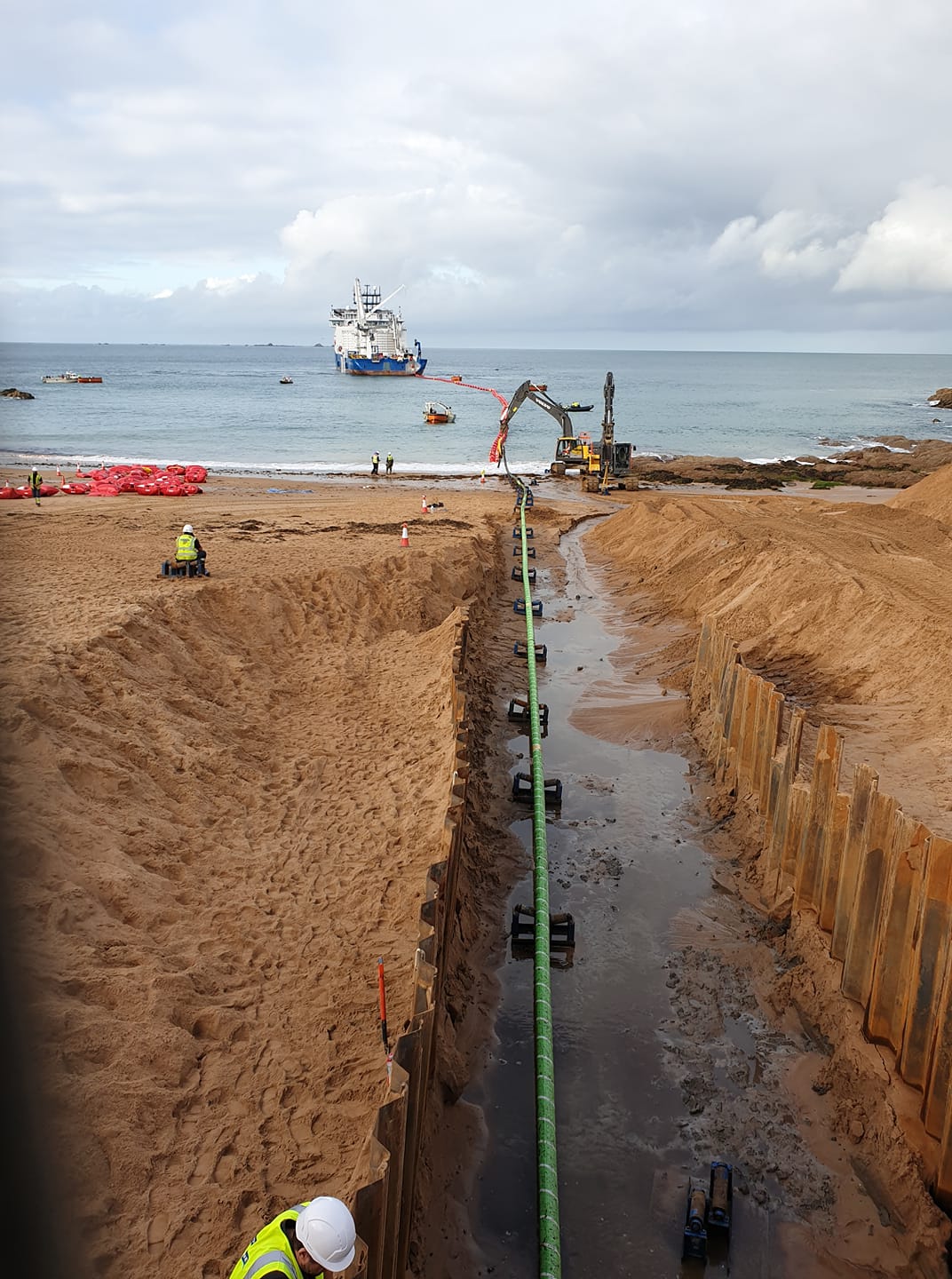
Phasing out petrol vehicles and fossil fuel heating means the phasing in of electric-powered alternatives. At the moment, this would mean using the power station more. So, questions we ask in the boardroom circle around how we can viably meet increasing demand.
Although local renewables alone cannot provide the electricity we need today, let alone in the future, using a mix of sources will offer reliability and security.
More demand needs more supply, which needs more infrastructure to deliver it.
Through looking back, we’re energised towards our vision of powering change for the future, be it 5, 10, 25 or 125 years, together.
Where should an extra 97MW come from to meet future electricity demand?