Wet or Dry Electric Heating

What’s the difference between wet and dry electric heating?
If you're planning to move over to electric heating, you’ll usually come across two main options. Put simply, the difference is how heat gets moved around your home.
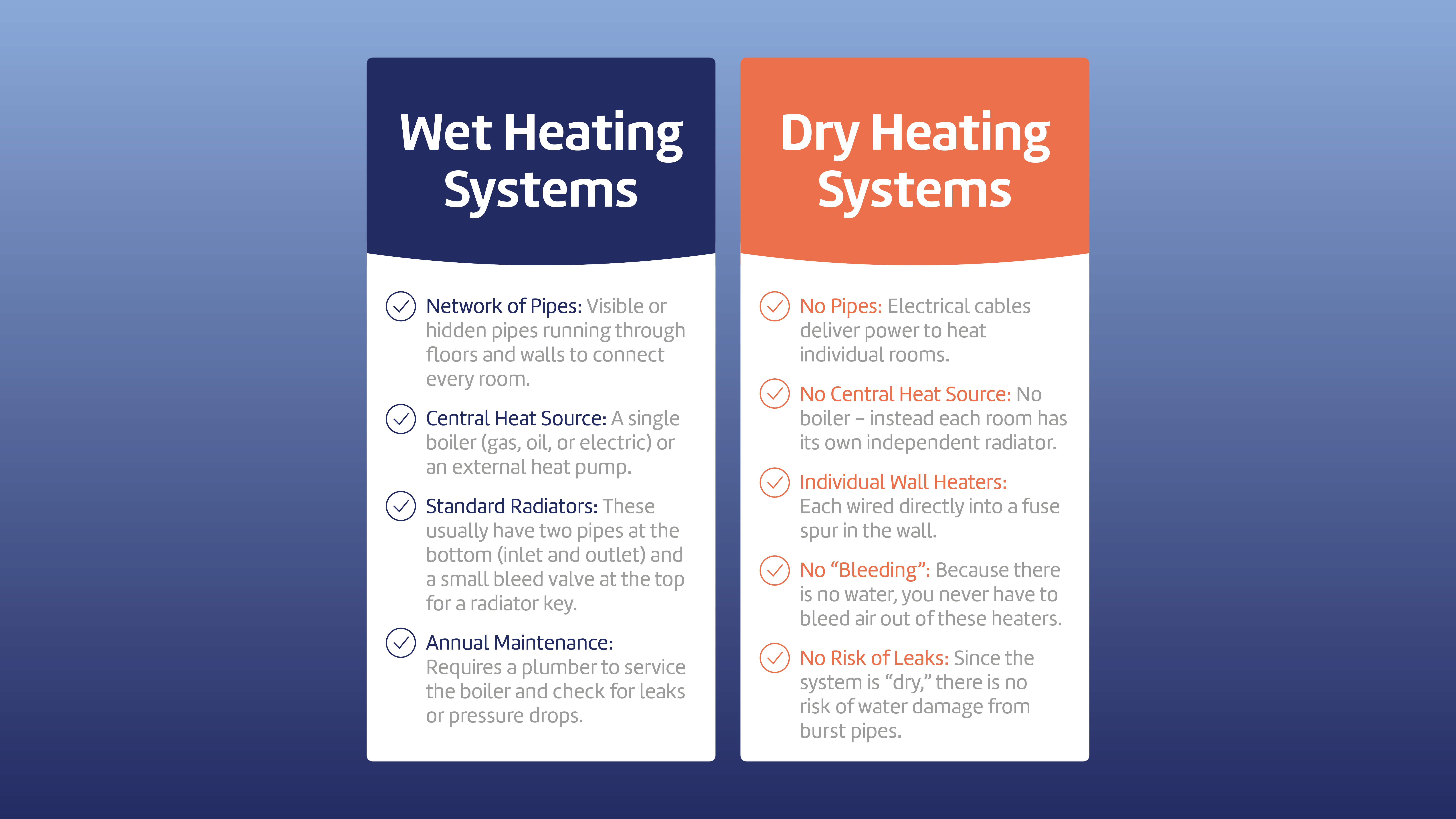
Wet electric heating (uses plumbing)
This system heats water, then pumps that water through plumbing and pipes around your home. The hot water travels from the heat source, through the pipework, into your radiators or underfloor system, and then back to the source to be reheated.
Because it uses water and pipes, it works in a very similar way to the traditional gas or oil central heating system which you may already have in your property.
Dry electric heating (no plumbing)
This system skips the water altogether. Instead, it uses electricity directly to heat storage heaters, panel radiators or, if its underfloor heating, underfloor cables. These give off heat into the room without any water, pipes or plumbing.
How the heat reaches your room
- Wet system: heat travels in a loop. Heated water moves through pipes → into radiators → releases warmth into the room → then returns to be reheated.
- Dry system: electricity travels through cables to either storage heaters, panel radiators or underfloor heating systems, located in each room. These then warm up and release heat straight into the room.
What this means for your installation
- If you already have a wet system (wet radiators, plumbing and pipes), it’s usually easier to switch to a wet electric heating system, as you can often reuse much of the existing setup. However, if your plumbing is old this might be a good time to consider switching to a dry heating system.
- A dry heating system is often simpler to install in new builds, major renovations or extensions where you’re starting from scratch, as you don’t need to install any pipework. Instead you'd install electric cables, which is quicker and cheaper.
- You can switch from a wet system to a dry system. This usually involves more work as you may need to remove existing pipework and install new electric cables and heating units.
Which heating system is right for me?
Both can work well. The best option will depend on:
- The heating system you already have
- Your budget
- How much installation work you're comfortable with
- How you plan to use your heating day to day
If you want to benefit from the cheapest electric heating tariffs available in Guernsey, consider installing an off-peak storage system. These systems are likely to always operate with the most cost-effective heating tariff.
-
![]() Off-Peak HeatingThe low-cost, low-carbon way to heat your home. New storage heaters feature intelligent controls and superior insulation meaning you can enjoy comfortable heat using cheaper, off-peak electricity.
-
![]() Electric Panels & RadiatorsStylish, convenient and no water needed for heating. These provide almost instant heat and can be individually controlled room by room on an app from your phone or on the individual radiator itself.
-
![]() Underfloor heatingEven warmth underfoot. Underfloor heating always works best on flooring that conducts heat well such as tile, wood, stone, laminate and vinyl.
-
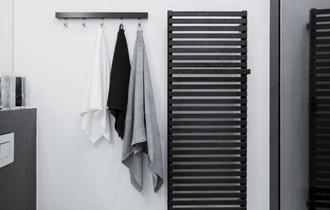
![]() Heated towel railsAdd style to your bathroom. Perfect for drying clothes and towels, always have a warm towel ready after your shower or bath.



-
![]() Air source heat pumps300% efficient heat. Electric air source heat pumps are one of the cheapest ways to heat your property and significantly reduce carbon emissions.
-
![]() Electric BoilersPractically 100% efficient. These compact, wall-mounted units can often replace an existing gas or oil boiler and are a popular way to convert to electric heating.
-
![]() Underfloor heatingEven warmth underfoot. Underfloor heating always works best on flooring that conducts heat well such as tile, wood, stone, laminate and vinyl.
-
![]() Heated towel railsAdd style to your bathroom. Perfect for drying clothes and towels, always have a warm towel ready after your shower or bath.