If those famous time travellers tapped an accelerator today, they wouldn't just break the time barrier, they might save a fortune on refuelling too. We're still 36 years shy of 'The Jetsons' era, when humanity will finally evolve to flying cars. Yet 2026 might still seem like a virtual reality sci-fi fantasy to the cast of various film classics.
EVERYBODY'S TALKING ABOUT V2H
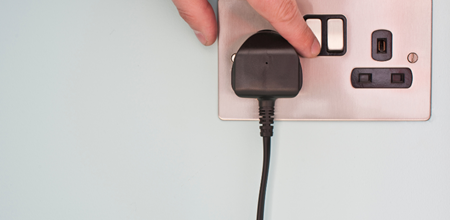
Forget the Mr Fusion Home Energy Reactor. In 2026, there's hushed conversation around groundbreaking technology 'Vehicle-to-Home' (V2H) charging instead. That's a car doing double duty: a standard fuel tank for driving by day, and a power station for your home by night. Owners can pump stored power from their car back into their property to avoid more expensive evening 'peak' electricity rates later.
While 2026 only saw the early days of trials, the promise of availability was becoming more likely.
Suddenly, you didn't need a bolt of lightning to power your castle anymore, just a machine parked in your driveway.
WHAT ABOUT RANGE ANXIETY?
Could watching a time travelling car's plutonium gauge run out of juice be about as terrifying as seeing your EV battery hover around 50%?
Drivers who previously never blinked at their quarter tank suddenly panic when EV batteries dip below half. It's a deep-seated neophobia, and transitioning away from 100 years of internal combustion was always going to come with a generous dose of trepidation.
For nearly a century, 'public refuellers' could only dream of private fuel taps dispensing petrol or diesel in their back yard. Instead, they accepted timeless rituals of visiting a public depot in all weathers and hand-dispensing flammable fuel into vehicles. With a 1980s hat on, time travellers might marvel at how EVs completely flip this script. As narratives shift from hydrocarbons to electrons, those who secure home charging points will rarely detour to a 'gas' station ever again.
Early adopters in Guernsey also faced a contemporary 'chicken or egg' riddle: what comes first?
- Car first: there are several public charging stations around the island.
- Charger first: this helps future-proof owned properties.
By 2026, the all-electric fleet surged to over 2,100 vehicles, with one in ten cars either hybrid or all-electric. However, despite what the movies promised about the 21st century, the current count of hover-converted flying cars remains a firm zero.
CHARGING AHEAD
Time travellers apparently needed 1.21 'jigowatts' of power.
In 2025, Guernsey used around 364.3 Gigawatt Hours of power. That'd be enough to travel through time 301 times then.
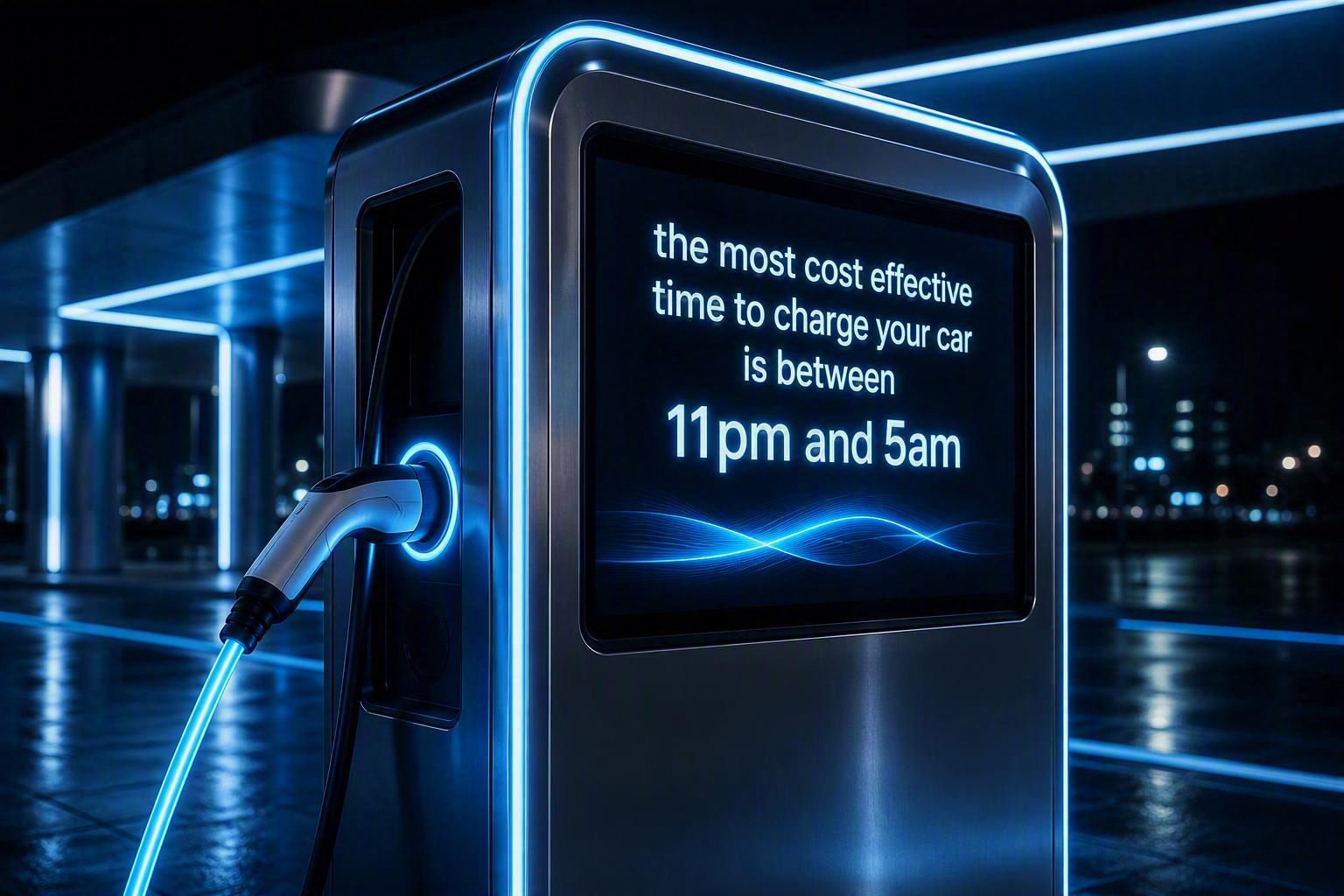
But amongst all this time-travelling potential, today's savviest EV drivers could give movie casts a vital piece of advice; the cheapest, cleanest time to charge in Guernsey is between 11pm and 5am.
Much like setting time circuits, EV owners use smart systems to automatically delay charging to these golden, off-peak hours.
But what if your personal bank vault wasn't ready to fund that brand-new ride yet? Islanders can turn to a helpful piece of Green Finance, where those buying sustainable products (including electric vehicles and chargers) could secure discounted interest rates from some local lenders.
And public infrastructure can step in to help those without their own charging point, as a small island means public charging points are always only minutes away from work or home. Plus, for a 5am airport run, what's easier to find: an open petrol station, or a 24/7 public charging point?
CARBON BREAKUP
Stale beer and banana peels alone may never catch on as a reliable fuel source. Thankfully, we can skip the bin and harness cleaner forces of nature instead.
Even taking battery production, daily operation, and end-of-life disposal into account, electric vehicles produce a staggering 70% less in carbon emissions than a comparable petrol car. Or put another way, driving one petrol vehicle pumps more pollution into our local air than three electric vehicles combined.
Producing EV batteries creates a big carbon debt. But when electric replaces petrol, this debt can clear quite quickly. Plus, drivers speed up this eco-payback when they charge EVs between 11pm and 5am. Plugging in during these hours means owners skip the dirtier daytime periods when Guernsey must burn local fossil fuels for electricity.
THE TWIST THAT CHANGED EVERYTHING
We've seen on screen a desperate attempt to escape 1955 using a lightning bolt.
Fast forward to the year 2000, and in real life Guernsey pulled off its own version by connecting to a massive external power supply via a subsea cable.
Linking us to the European grid, this plot twist wiped out nearly half of the island's 1990s air pollution levels, and connected us to a much larger, more dependable electricity network. By 2026, increasing electric transport gave hope to clear the skies even further.
Electric vehicles also cost far less to drive. Recent fuel price headlines are a timely reminder that those prices lighting up forecourts are often influenced by events far beyond our shores.
Few islanders gave much thought to the Strait of Hormuz before 2026, but many have since discovered how shipping lanes thousands of miles away can remove a far chunk from their wages.
-
The best time to charge in Guernsey is between 11pm and 5am when drivers rely on 100% low-carbon off-peak electricity imported from Europe.
-
The second-best time is between 10am and 4pm, avoiding some of the major fossil-fuel powered peaks.
Electricity carries a rich history, and this story is far from its final credits. To make sure you don't miss the upcoming sequel to Guernsey's energy transition, follow Guernsey Electricity on social media or secure your front-row seat to the future with our e-newsletter.