


Off Peak Storage Boilers

Cheaper, cleaner electric heating powered by low-carbon energy.
-
![]() Cheaper to runHeating Running Cost Calculator
Off Peak Boilers will store or use power over 19 'off-peak' hours during the day and night at a cheaper rate than the standard, flat-rate tariff used for traditional electric flow boilers.
-
![]() Application AcceptanceApplying for powerYour installer will check that there’s enough capacity in your local electricity network for your new heating system. As off-peak storage boilers use electricity mainly at off-peak times, approval is more likely than with a standard electric flow boiler.
-
![]() 100% EfficientEfficiency explainedEvery £1 of electricity you use is turned into £1 worth of heat for your home. Gas and oil boilers will always lose some energy as flue gases, and will become less efficient as they get older.


Is an Off Peak Storage Boiler right for you?
When it comes to Off Peak Heating in Guernsey, there are two options.
Off Peak Storage Boiler
Overnight Off Peak Storage Heaters
When is an Off Peak Storage Boiler a good option?
If you've already got an oil or gas heating system set up which relies on a boiler, plumbing and radiators connected by pipework, the easiest option is to retrofit an off-peak boiler, as you won't need to rip out of your existing infrastructure.
Using the Off Peak Heat 19 tariff for underfloor heating could also be an option, if it's a well-insulated 100mm structural slab.
Can I put my existing electric boiler on an off-peak tariff?
We don't recommend moving from your current electric heating tariff to the Off Peak Heat 19 tariff until your electric boiler needs replacing.
This is because the necessary controls and storage capacity to avoid consuming electricity during the five hours of peak-rate electricity are unlikely to be present in your current electric heating system.
Next time you have your electric flow boiler serviced, ask how old it is. If it's coming to end-of-life, now is a good time to consider a change to a storage boiler on the Off Peak Heat 19 tariff.
Which is better: An off-peak storage boiler or overnight storage heaters?
Overnight off peak storage heaters are cheaper to run, but are best for when you're planning a major renovation, building an extension or for a new-build. This is because it's easier to install the cabling from scratch, rather than removing old pipework and retrofitting.
Warning: plug-in electric heaters can cost a bomb
Their small size and convenience could be hiding potential for a big electricity bill. That's because you may be running them on the higher 'normal rate' hours on Super Economy 12 Tariff (one of the highest electricity rate timebands!) - unless you're strict and only use them during your cheap times. If this is for a few hours, the cost can really add up.

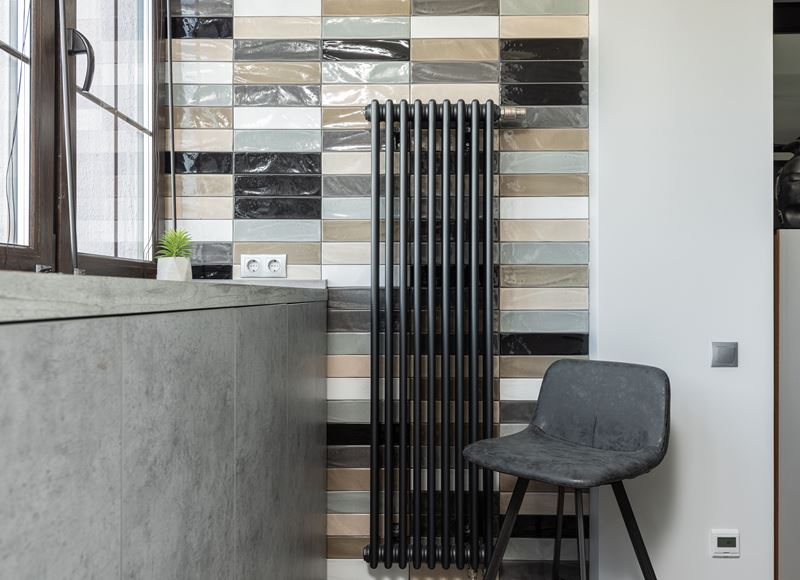
Off Peak Boilers should be relatively easy to install in your home as they can retrofit to your existing gas or oil heating system.
If you currently have a standard electric flow boiler which is becoming end-of-life, it's also worth considering replacing this with an off-peak storage boiler using the Off Peak Heat 19 tariff.
Don’t wait for your boiler to break
Spring and Summer are the best time to make the switch. As with a house extension or roof replacement, it takes time but is worthwhile.
Important: What you need to know before you switch to electric heating.
-
![]() Step 1
We will provide you with a free home survey to understand what your property needs. Book your free home survey here
-
![]() Step 2
One of our advisors will calculate the heat loss specific to your property and provide you with a quote based on your property needs. As heat loss is unique to each property and usually depends on the level of insulation, quotes may differ between customers.
-
![]() Step 3
Once you have accepted your quote, your installer will submit an 'Additional Load Application' to Guernsey Electricity. This checks if the incoming electricity supply and surrounding network is substantial enough for the additional electricity ‘load’ needed to power your heating system.

Power Supply
It’s really important to plan ahead and check if your property needs a supply line cable upgrade.
Electricity is delivered to your door through an underground network of cables. Some properties don’t have enough capacity in the existing service cable to supply a new heating system and will need a service upgrade.
Your installer can check with Guernsey Electricity by submitting an additional load application if your property needs a supply line cable upgrade
Frequently asked questions
Making the switch to electric heating is a fantastic investment for your property. Like any property upgrade, the installation will take time to complete and we want to help answer your questions before you make the decision to change.
We recommend checking current prices and tariffs online first.
Use our online calculator to compare heating running costs
Heating systems only replace the volume of heat lost from your property, which means property insulation is the most effective way to reduce the running costs of any heating system.
Off-Peak Storage Heating
This heating system runs on the cheapest tariff available for electric heating as, like a battery, they're designed to store heat energy during your low-rate overnight periods. This cheaper stored heat can then be used during the day as and when you need it.
Please check our Super Economy 12 'Low-Rate' prices here. Your low-rate time bands are printed on the back of your electricity bill.
Electric Boilers and Underfloor Heating
These run on the Superheat Tariff.
Electric heating is costs significantly less to run than gas heating in Guernsey.
Oil is one of the cheapest commodities and although oil heating systems may initially have a lower running cost when new at around 91% efficiency, over time the cost to run your oil heating will increase as your boiler's efficiency decreases.
Some customers have replaced oil boilers working at less than 70% efficiency, meaning over 30% of their bill was used to pay for waste greenhouse gas emissions rather than valuable heat for their home.
Air Source Heat Pumps
This is the least expensive way to heat a property and runs on the Heat Pump tariff.
Unlike other heating systems, air source heat pumps provide three times as much energy as is put in. This means that for every £1 spent on electricity to run the heat pump, you could generate £3 worth of heat for your property.
If you currently heat your property with a traditional electric heating system*, a gas or oil system, you will significantly cut your carbon emissions by moving to an Off-Peak Storage Heating System.
This is because we import around 60MW of electricity from low-carbon sources from the European grid, and all additional demand is topped up from the Vale power station. As Off Peak Storage Heaters store power during overnight off-peak times on the grid, it can be powered using 100% low-carbon electricity.
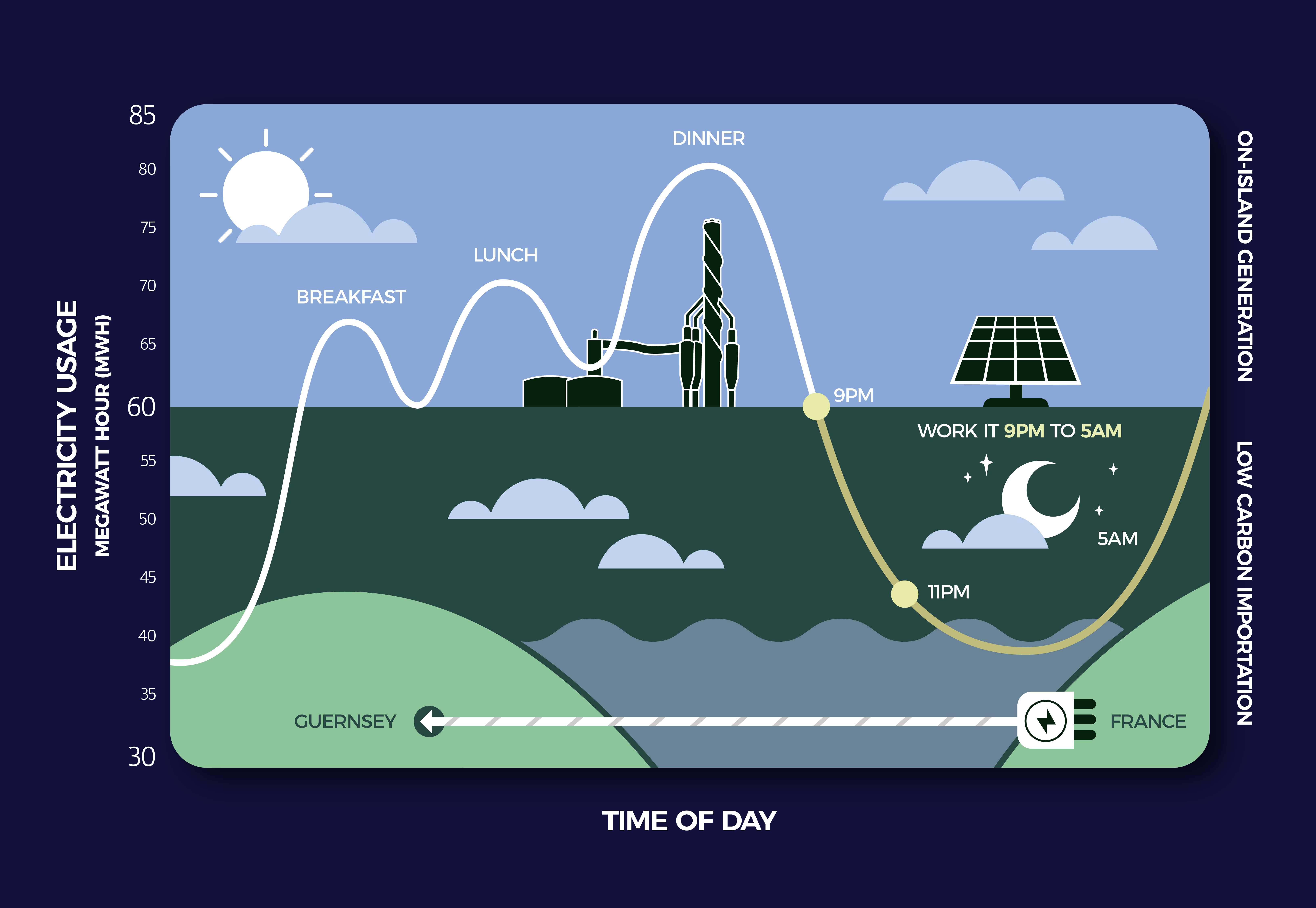
*Air source heat pumps will help you significantly reduce your carbon footprint too.
No - unless you're replacing an existing electric heating system. However, your preferred installer should always do their best to provide a solution in an emergency.
Switching to an electric system is a positive development for your property and similar to other property improvements such as extensions and roof renovations, it will take time to complete.
Lead times will vary depending on workload and availability, and it is worth preparing for your switch to electric heating well in advance. Please be aware that your property may need a supply line cable upgrade which will add to the timeframe.
We also recommend switching during the spring and summer months when possible so the work can be carried out when you do not need to use the heating. Depending on the work required, it may take several weeks from start to finish.
There will be a different answer to this question for each property depending on:
- the network infrastructure in your area
- the supply line cable connecting your property to the network, and;
- how much electricity other properties around you are using
Your neighbour may be in a different position to you if, for example, they had electric heating installed a few years ago, or the network serving their property is from a different substation.
Your installer will submit an Additional Load Form to Guernsey Electricity's new connections team to establish if there is enough power in the surrounding cable network to power an electric heating system in your property.
Replacing your gas or oil boiler whilst retaining your existing radiators is the quickest and most simple option. This is known as a ‘wet system’ as it relies on water heated by electricity to be pumped around the property.
Moving to electric radiators is known as a ‘dry’ system.
This doesn’t need a boiler and all existing radiators linked by pipework can be removed. Electric radiators are then installed throughout the home with a cable supplying each radiator to power it individually. This means each radiator is powered independently and has its own programmer and thermostat.
The main benefits of a dry electric heating system are:
- no water pumped around the property which reduces the risk of leaks.
- if one radiator fails, the others will still work unlike a wet system where if the boiler fails, there is no heat for the home.
- each room can have accurate temperature control e.g. your lounge can be warm and cosy at 21°C, and the spare room can be as low as 12°C just to keep it aired.
If the supply line cable supplying your property has sufficient capacity, you will not need an upgrade. However to find this out, your installer will need to submit an 'additional load' application.