Set the timers to heat your water from 11pm and finish at 5am so you can stop relying on the power station to heat your water. The amount of power you use is still the same - but the source is much better.
Step into cleaner, greener showers and baths
Heating water with fossil-fuels
At the moment, many of us heat our water all day as we’re worried about running out of hot water when we need it.
Or we set timers to heat shortly before we need it, which can often collide with ‘peak demand’ times on the electricity grid, because everyone else wants to use electricity then too. Maybe your timers have just not been set to heat during the cleanest, cheapest time.
The truth is that if you have a correctly sized direct hot water cylinder for your occupant’s needs and it’s insulated with modern materials (which most of them are), you only need to heat water for a short time.
From cold to hot, direct hot water cylinders take around 2-hours to heat water and are typically used in most households for:
- Showers
- Baths
- Kitchen and bathroom sinks
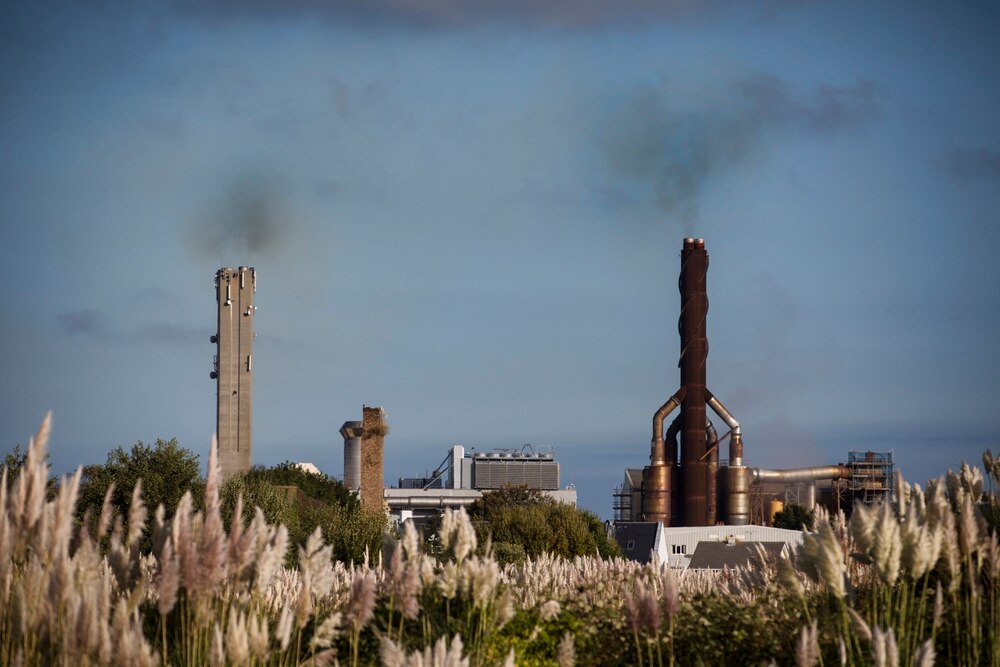
But when thousands of people think the same thing, a huge amount of unnecessary pressure is placed on the electricity grid. During winter, the Vale power station is needed to top-up using fossil-fuels when this demand peaks.
Unfortunately, that means the carbon impact of tens of thousands of households heating water at the same time during peak hours is considerable. That's why our campaign focuses on encouraging people to rethink how they heat their water as a simple switch has such a big impact.
Sleep- become more sustainable while you're sleeping
Heat - let the power of the night take care of your hot water needs and set the timer to heat 11pm to 5am
Wake - step out of peak times and into hot water that's better for our island
Repeat - keep your timers set 11pm to 5am then wake up everyday to cleaner, cheaper hot water
If we can persuade around 4000 islanders to heat their water between 11pm and 5am, we may not need to use an additional fossil-fuel generator at the power station.
Have you switched? Sign the pledge
What is the carbon cost of heating water?
Heating water between 11pm-5am will reduce your cylinder’s carbon emissions by around 90%.
With an average annual energy consumption of 3285 kWh of electricity a year per household*, it's less about the amount you use but rather the time you use it that has the biggest impact on your carbon footprint.
Measured in grams of carbon dioxide (equivalent), we discovered that a direct hot water cylinder used during low-carbon hours (particularly between 11pm and 5am) produces almost 90% less in lifecycle carbon emissions.
Below are figures as of 31 December 2024 compared against some of the household items well known for using a lot of electricity to help demonstrate the impact hot water cylinders are quietly having in the background.
|
31 December 2024** |
Total Electricity Mix (including power station) grams of CO2e |
GEL Importation Mix (Between 11pm and 5am) grams of CO2e |
|
Hot Water Cylinder |
537.41g |
41.03g |
|
Tumble Dryer |
31.74g |
2.42g |
|
Kettle |
13.82g |
1.06g |
*Estimated using the assumption of a hot water cylinder with two 3000 Watt immersion heater elements used for 3 hours a day for 365 days a year.
**Please find our latest carbon emission studies at www.electricity.gg/verification
Want to understand more about the impact of peak demand?
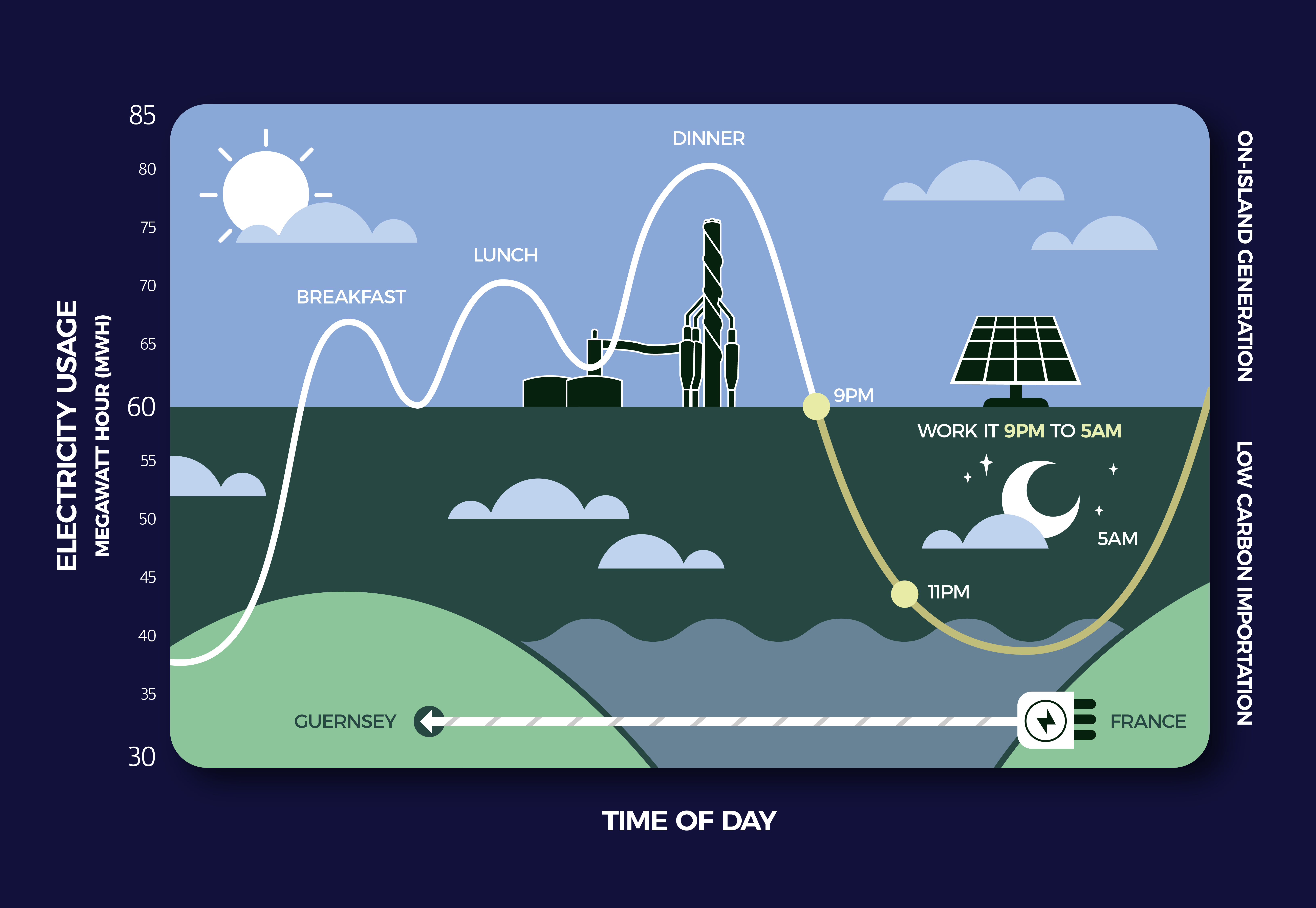
Using electricity during ‘peak’ hours – around breakfast, lunch and dinner – can cause higher greenhouse gas emissions compared to the exact same usage during our low-carbon importation hours.
This is because we import 60MW (megawatts) of electricity from low-carbon sources in the European grid, and all extra demand is topped up using fossil-fuel generators at the Vale power station.
How do I change my timers?
Most hot water cylinders come with an immersion timer, however if you don’t have one, simply ask your electrician to get one installed.
These timers give you more say over precisely when you heat your water, and if you use the Super Economy 12 Tariff for your hot water, this is particularly helpful.
Try before you commit
If you have a programmer installed, it’s easy to change the time. And if you find it isn’t working out for whatever reason, simply switch back to your previous times.
- Find your timer. You may be able to trace the cable that is supplying the electricity to the cylinder element back to where your timer is installed, which could be a digital timer or a mechanical dial. If in doubt, please ask your preferred electrician to help you find it.
- Check the current timer. Assuming you already have a timer, keep a record of the time it’s currently set to. If you don’t have a timer, ask your electrician to install a programmer/timer.
- Set heating schedule. Adjust the timer to heat from 11pm and stop at 5am. If you Google the make and model of the programmer you’ll find specific guidance on how to set the timers on your cylinder.
- Digital timers should have an up/down button to set start and end times
- Mechanical timers should have a dial that you rotate to set the “on” and “off” periods
- Confirm the settings. Double-check the timer settings to make sure they kick off at 11pm – you may need to select ‘set’ or ‘confirm.’
- Activate timer. Switch the timer to “auto” or “timer” mode to make sure it follows the 11pm-5am schedule and doesn’t just heat constantly*.
*If you heat your water all day on the Super Economy 12 Tariff, you could be spending more than you need to during your 'normal-rate' time bands.
Where can I find the timers?
Hot water cylinders are usually found in accessible areas such as airing cupboards, utility rooms, garages, or basements.
If you've got a vented cylinder, this might be in your loft space, and if you have a modern unvented cylinder (which doesn't need a loft tank), this could be anywhere out-of-the-way in your property.
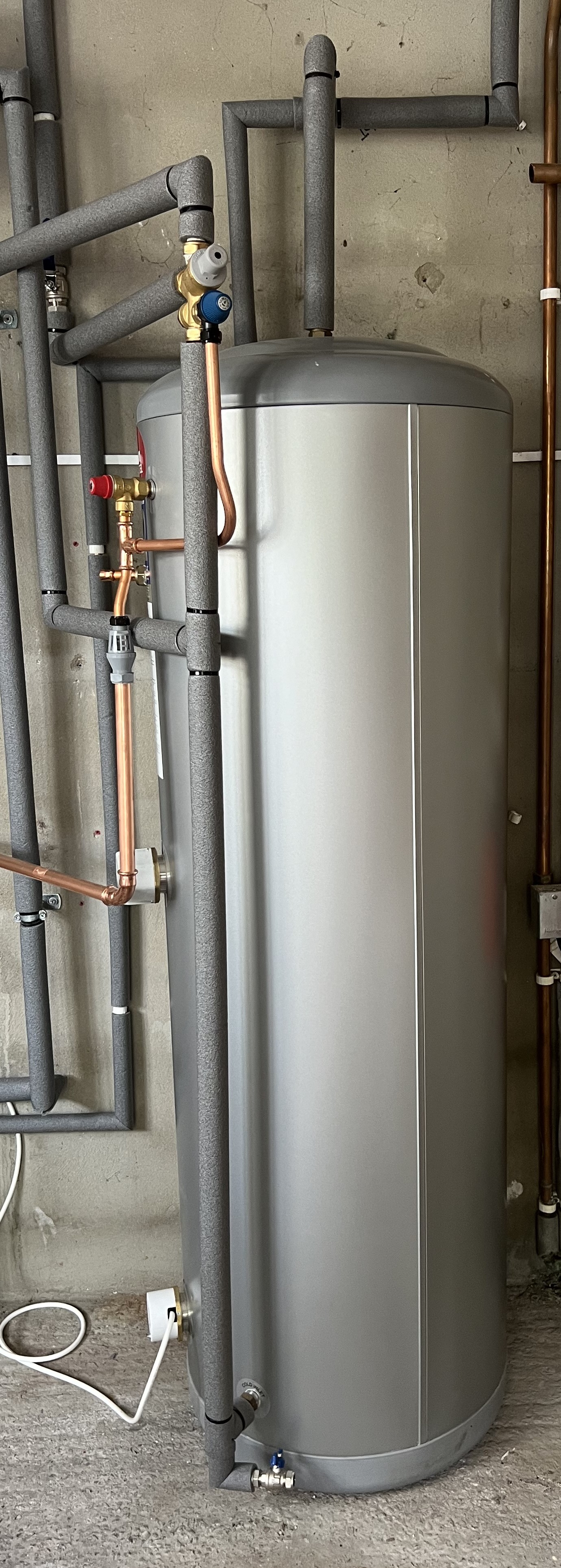
You'll find your 'elements' on the side of your hot water cylinder - these are the two white circular elements shown in the photo below. Simply trace the cables from those elements to either the outlets (if no timers fitted), or timers.
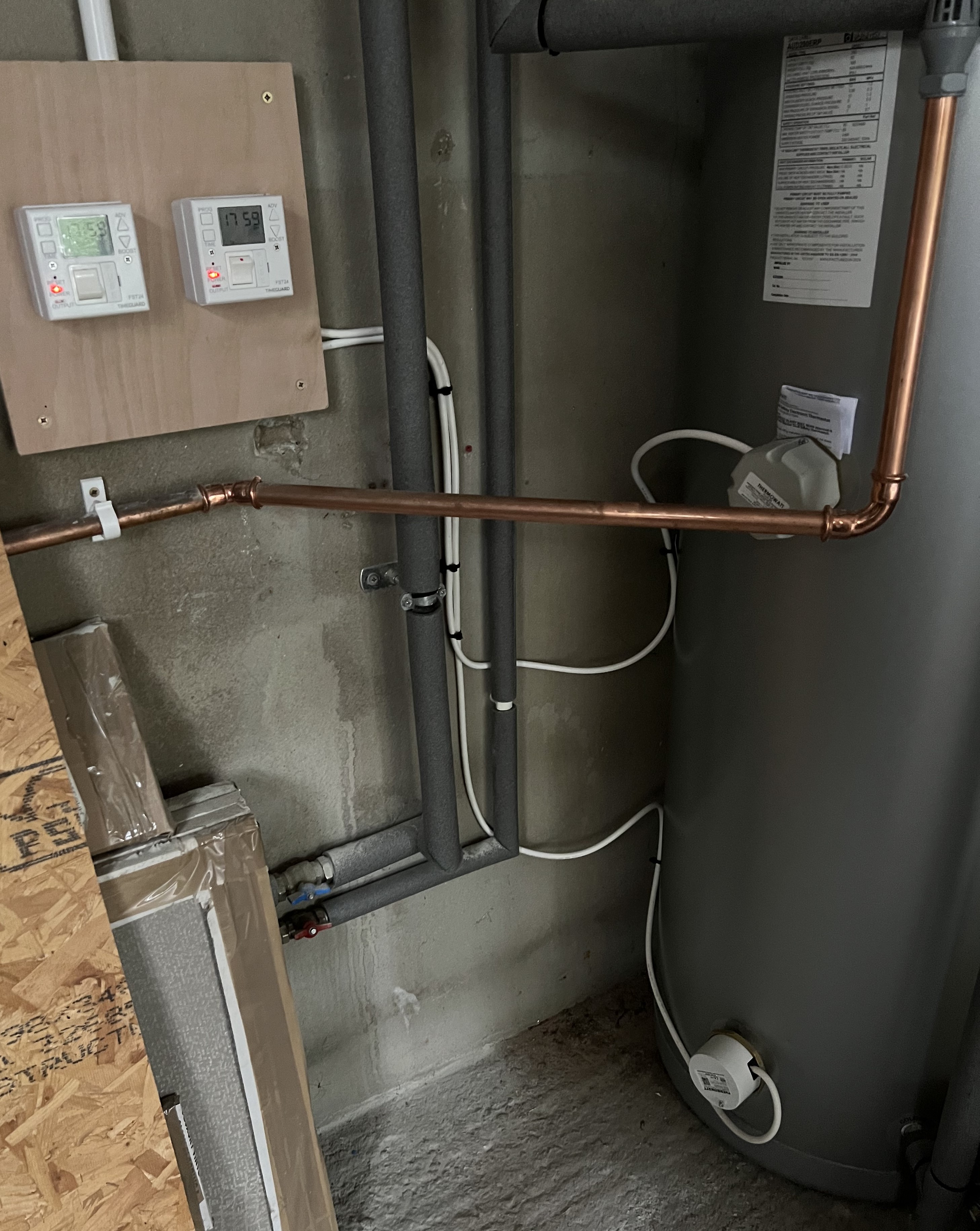
The photo below shows two timers, one for each element, however often both of the circular elements are controlled by one timer.
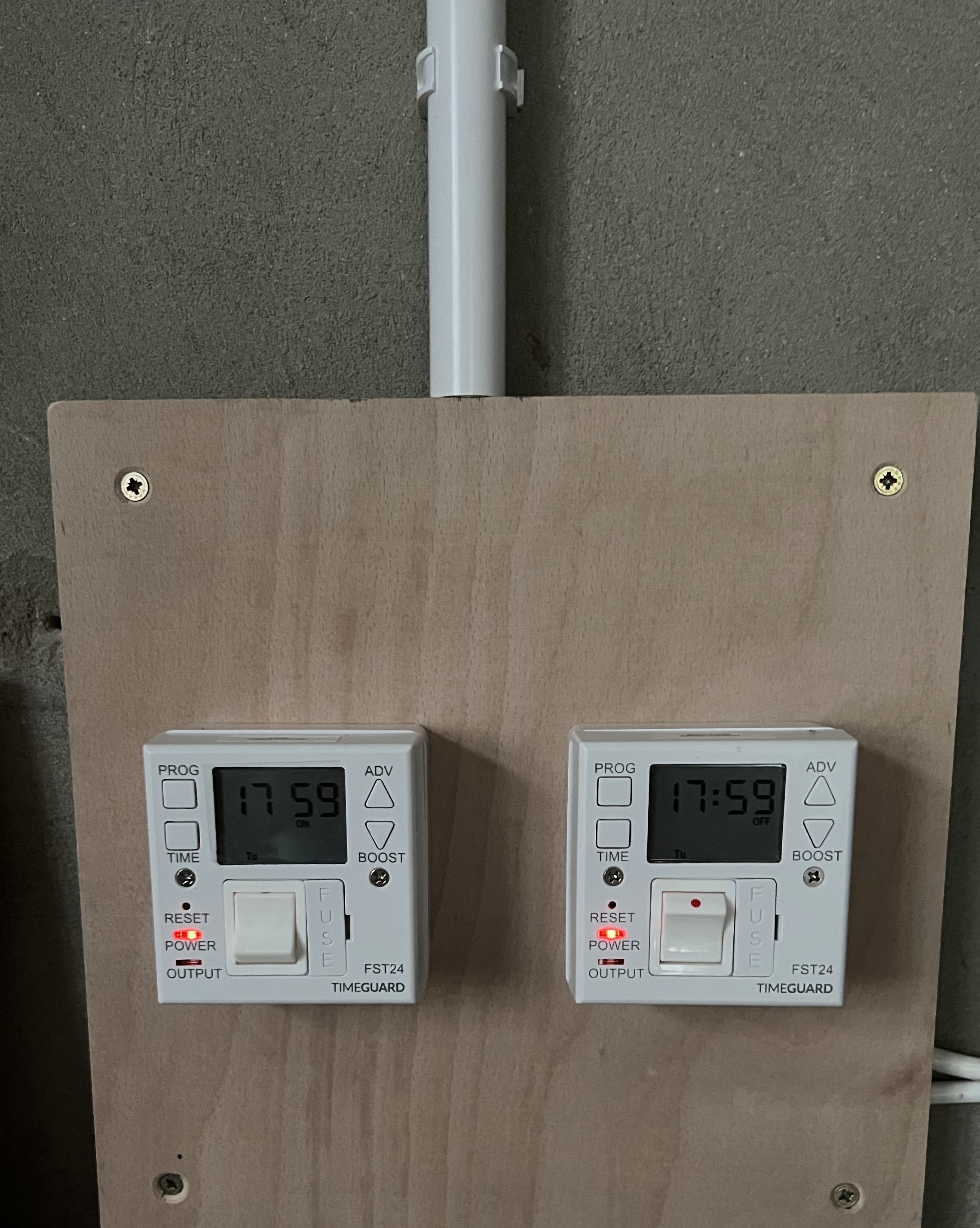
- Right - this timer is connected to the bottom element on the cylinder and is programmed to heat the water from 11pm to 5am, and can be boosted during your 2-hour daytime cheap rates if needed. You can see in the photo that this one is switched on
- Left - this timer is connected to the element at the top of the cylinder and is currently switched off.
Not sure what to do? Please speak to your preferred electrician.
Why don’t I need to heat my water all day?
If you’ve ever been sea swimming, you may have noticed that the warmer water always sits on top of the colder water beneath it.
This law of physics is exactly the same in a direct hot water cylinder and the less dense hot water heated during your off-peak times can be drawn off from the top of the cylinder first, meaning you won’t feel cold water unless you’ve used up all the hot.
If your cylinder is empty, it’ll take around 2-hours to have it fully back up to speed with the hot water your home needs. As most hot water cylinders are purposefully designed with insulation to retain heat, the water will stay hot for several hours and be ready for when you need it during the day.
You may also reduce costs by only heating when you need it as constant heating can lead to unnecessary heat loss, where your system reheats water that has cooled down slightly, which adds up over time.
If you find you often run out of hot water, this is usually because the cylinder isn’t big enough for your property occupant’s needs and you may need a larger one. If your cylinder is the right size but occupants use a lot of hot water, behaviour change will also really help, for example having shorter showers.
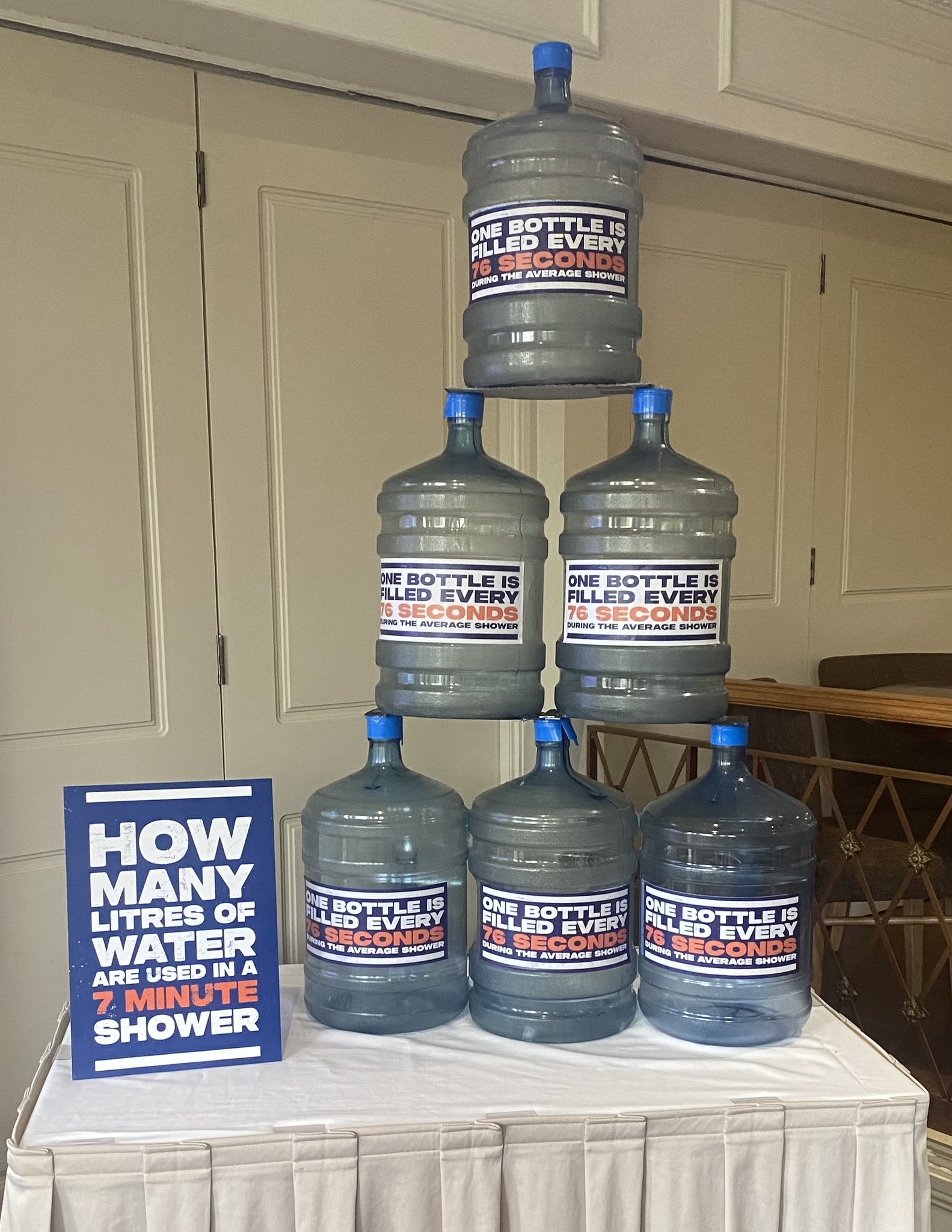
The photo below shows how much water you could be using during an average 7-minute shower and demonstrates how every minute counts when it comes to not running out of hot water.
Have you switched? Sign the pledge
The main takeaway
Wave goodbye to fossil-fuel powered showers simply by changing the time on your electric hot water cylinder to heat between 11pm and 5am.
There's also no need to heat direct hot water cylinders all day because modern systems are designed to be efficient and well-insulated, meaning you can save energy and significantly reduce your carbon footprint.
And if you feel you need to heat your water shortly before using it, remember your hot water cylinder is designed to retain heat, so it should be ready to use when you need it in the morning and evening even if it’s set to heat from 11pm.
If ever you do need extra, the 1-hour ‘boost’ button can be used to heat up your water quickly as and when you need it.
Need some energy saving advice tailored to your home? Find out more about our Home Energy Saving Audit